




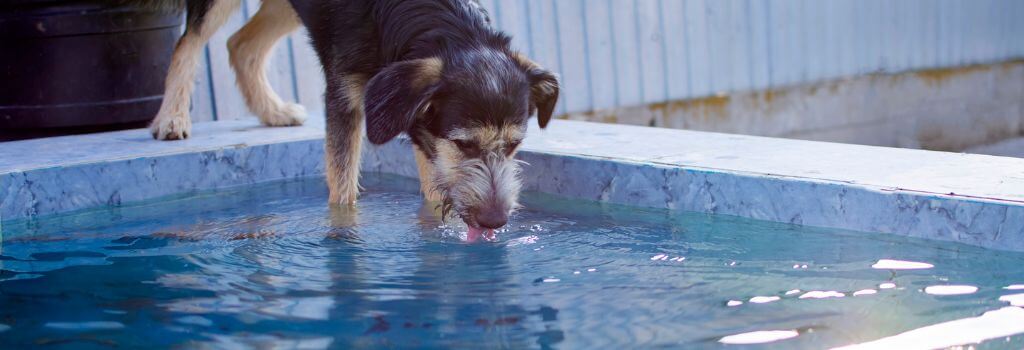
Many dogs love being near the pool. Some swim, some splash from the steps, and some treat the pool like an oversized water bowl. A few laps of pool water may not seem like a big deal, especially when the water looks clean, but pool water is not meant to be your dog’s drinking water.
In most cases, a small amount of properly maintained pool water is unlikely to cause a serious problem. The concern increases when a dog drinks a large amount, the pool chemicals are not balanced, the pool has recently been shocked, or your dog has access to concentrated pool chemicals. Knowing what is normal, what is risky, and how to prevent pool water drinking can help keep summer swim days safer.
Is Pool Water Safe for Dogs to Drink?
Dogs should not be encouraged to drink pool water. Even when a pool is properly maintained, the water may contain chlorine, salt, algaecides, stabilizers, or other chemicals that are meant to keep the pool sanitary, not serve as a water source for pets.
That said, if your dog takes a few quick laps from a balanced backyard pool, try not to panic. According to the Pet Poison Helpline, problems are more likely when a pool is overchlorinated or when a pet drinks too much pool water, which can lead to gastrointestinal upset such as vomiting and diarrhea. Concentrated chlorine products, such as tablets, are much more dangerous and can be corrosive to the mouth, skin, digestive tract, and respiratory tract.
The safest approach is simple: treat pool water as water your dog may accidentally swallow during play, not something they should intentionally drink. Fresh drinking water should always be available nearby.
Why Dogs Drink Pool Water
Some dogs drink pool water because they are thirsty. Others do it because they are excited, hot, curious, or already in the habit of drinking from outdoor water sources. Dogs may also swallow pool water while retrieving toys, playing on the steps, or learning how to swim.
Pool water can be especially tempting when a dog is outside in warm weather and does not have easy access to fresh water. If your dog has to leave the pool area or walk far away to find their bowl, the pool may become the closest option.
Swallowing Water During Play
Even dogs who are not deliberately drinking may swallow water during pool games. This is common with dogs who retrieve floating toys, bite at splashing water, or swim with their mouth open. Over time, repeated gulping can add up.
If your dog is swallowing water during play, shorten pool sessions and take breaks. Offer fresh water often, and use pool toys that do not encourage your dog to bite repeatedly at the water’s surface.
What Can Happen If a Dog Drinks Pool Water?
The most common concern after drinking pool water is digestive upset. Some dogs may vomit, have diarrhea, drool, or seem uncomfortable. Mild stomach upset may pass, but repeated vomiting, frequent diarrhea, loss of appetite, or low energy should be discussed with your veterinarian.
Pool water can also be irritating to the mouth, throat, eyes, skin, or paws, especially if the chemical balance is off. Dogs with sensitive skin or allergies may be more prone to irritation after swimming. Rinsing your dog with fresh water after pool time can help remove chemical residue from the coat and skin.
Chlorine Pools vs. Saltwater Pools
Saltwater pools still use chlorine to help sanitize the water, though the system produces chlorine differently than a traditional chlorinated pool. This means saltwater pools are not chemical-free, and they are not a safe drinking source for dogs.
Drinking too much saltwater pool water may lead to digestive upset. While saltwater pools are much less salty than ocean water, dogs should still have fresh water available so they are not tempted to use the pool as a water bowl.
Pool Shock and Concentrated Pool Chemicals Are Different
A properly maintained pool is very different from concentrated pool chemicals. Chlorine tablets, pool shock, algaecides, test chemicals, and other pool products should be stored securely away from pets. These products can be dangerous if chewed, swallowed, spilled, or licked.
Cornell’s Riney Canine Health Center explains that pool shock involves an extremely high chlorine concentration and can irritate a dog’s skin and respiratory tissues. Concentrated pool chemicals, including chlorine tabs, crystals, and concentrated liquids, are highly caustic to animals and people. Do not allow dogs into a pool immediately after shocking or chemical treatment. Follow the product label and pool professional guidance before letting people or pets swim again. If your dog gets into concentrated pool chemicals, contact your veterinarian, an emergency veterinary hospital, or a pet poison control service right away.
Signs Your Dog Drank Too Much Pool Water
If your dog drinks a small amount and continues acting normal, you may only need to watch them closely. The situation is different if they drank a large amount, were in a recently treated pool, or have symptoms afterward.
Pay attention to timing, behavior, and whether symptoms are improving or getting worse. Dogs who are very small, very young, senior, or living with chronic health conditions may need care sooner because they can become dehydrated or unstable more quickly.
- Vomiting or diarrhea: One mild episode may be monitored, but repeated episodes should be discussed with your veterinarian.
- Drooling, gagging, or pawing at the mouth: These signs may occur with oral irritation, especially after exposure to chemicals.
- Not eating or seeming uncomfortable: Appetite loss after pool water exposure should not be ignored if it continues.
- Coughing, wheezing, or breathing changes: Respiratory signs after swimming or chemical exposure should be treated seriously.
- Weakness, confusion, tremors, or collapse: These are urgent signs and require immediate veterinary care.
Can Dogs Get Water Intoxication From Pool Play?
Water intoxication is uncommon, but it can happen when a dog takes in too much water in a short period of time. This is not only a pool issue. It can happen during swimming, retrieving, hose play, or any activity where a dog repeatedly gulps water.
ASPCApro notes that acute water intoxication is not common and generally occurs during warmer months when a pet has been at the beach or a pool. The concern is that taking in too much water can dilute sodium levels in the body, creating a serious electrolyte problem. Signs may include vomiting, bloating, weakness, loss of coordination, lethargy, pale gums, drooling, dilated pupils, tremors, seizures, or collapse. If your dog has been playing in water and develops neurologic signs or suddenly seems very unwell, seek emergency veterinary care immediately.
How to Keep Your Dog From Drinking Pool Water
The best way to reduce pool water drinking is to make fresh water the easier and more appealing option. Place a bowl near the pool, keep it clean, and refill it with cool water often. Take regular breaks, especially on hot days, so your dog can rest and drink away from the pool.
Supervision matters. If your dog repeatedly drinks from the pool, redirect them calmly to their bowl and reward them for drinking fresh water. If they continue returning to the pool to drink, it may be time to end the session and try again later.
- Bring fresh water outside: Keep a clean bowl within easy reach of the pool area.
- Schedule swim breaks: Give your dog time to rest, cool down, and drink safely.
- Rinse after swimming: Use fresh water to remove chlorine, salt, and pool residue from the coat and paws.
- Choose toys carefully: Avoid games that make your dog gulp water repeatedly.
- Store chemicals securely: Keep pool products in closed containers and locked or pet-inaccessible areas.
- Block unsupervised access: Use fencing, gates, or barriers so your dog cannot drink from or fall into the pool when no one is watching.
When to Call Your Veterinarian
Call your veterinarian if your dog drank a large amount of pool water, drank from a pool that was recently shocked, got into concentrated pool chemicals, or develops vomiting, diarrhea, appetite loss, drooling, mouth irritation, coughing, or unusual behavior. It is helpful to know what type of pool you have, when chemicals were last added, and which products were used.
Seek urgent care if your dog is weak, disoriented, having trouble breathing, collapsing, having tremors or seizures, vomiting repeatedly, or unable to keep water down. These signs may point to a more serious problem than simple stomach upset. When in doubt, call early. Your veterinary team or a pet poison control service can help you decide whether home monitoring is reasonable or whether your dog should be seen right away.
Pool Days With Pets Can Be Fun With the Right Safety Steps
Dogs should not drink pool water as a regular water source, but a few accidental laps from a well-maintained pool are often less concerning than a large amount, chemical imbalance, recent pool shock, or exposure to concentrated chemicals. Fresh water, supervision, swim breaks, and secure chemical storage go a long way toward safer pool time.
If your dog loves the pool, make drinking from their bowl part of the routine. Keep an eye on how much water they swallow during play, rinse them afterward, and contact your veterinarian if they develop concerning signs. A little planning can help your dog enjoy summer water time more safely.
If you have questions and you'd like to reach out to us, you can call us directly at (210) 496-1315, or you can email us at [email protected]. Don't forget to follow us on social media Facebook, Instagram.